

GITEX AI Europe advances the path to digital sovereignty and global AI leadership
GITEX AI Europe cast a compelling spotlight on the technologies, policies, and partnerships shaping the continent’s digital future throughout the second and final day of Europe’s most international tech and AI show at Messe Berlin.
From the growing role of large language models as Europe’s new economic infrastructure to cross-border innovation ecosystems and the future governance of decentralised online platforms, Wednesday’s programme tackled the defining questions surrounding AI adoption, competitiveness, and digital sovereignty.
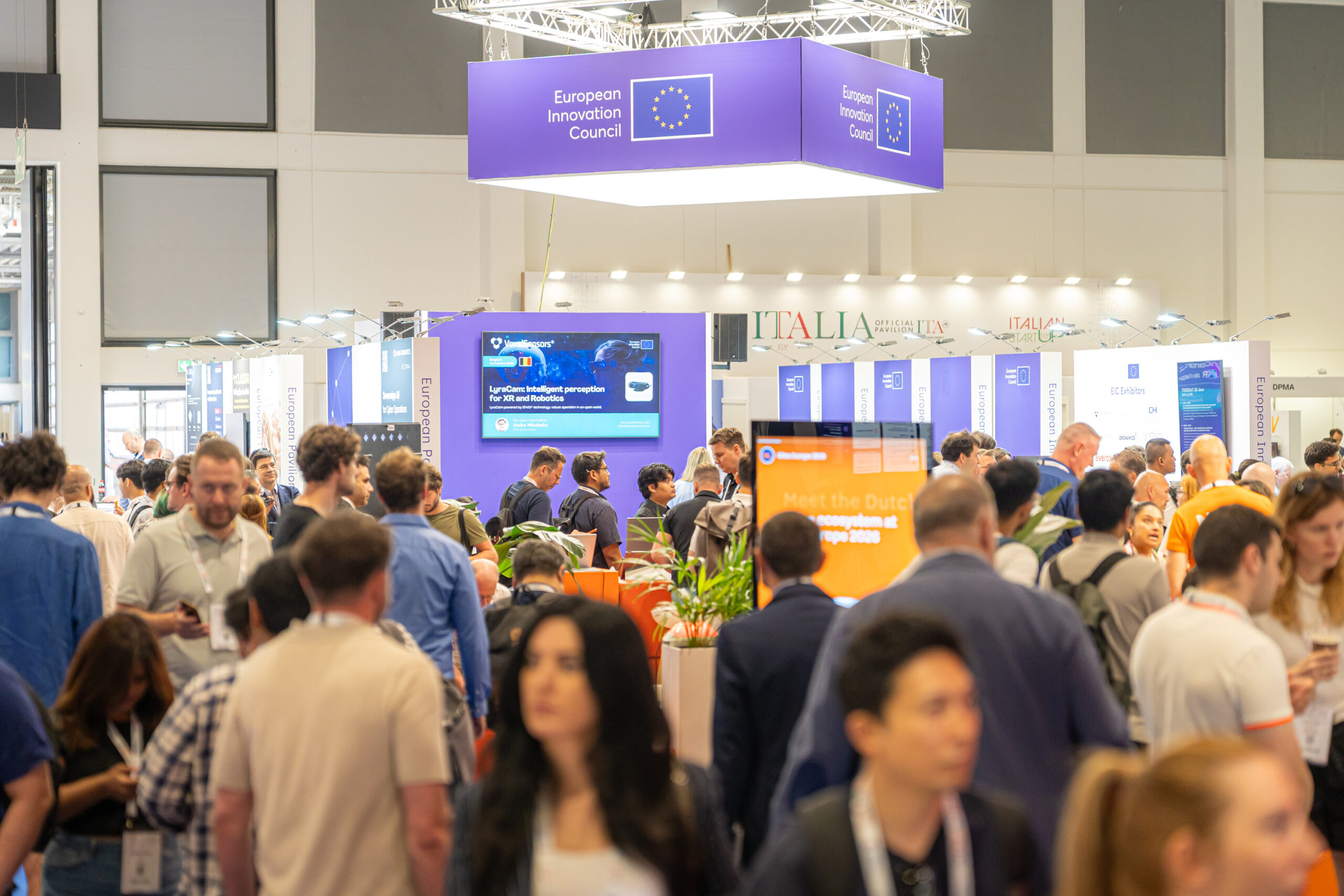
GITEX AI EUROPE 2026 welcomed thousands of tech executives from 101 countries across two days, forging connections and new business partnerships with 800-plus exhibitors and startups, 80 percent of which came from outside of Germany. That, coupled with a conference programme featuring 280 speakers from 40 countries, underscored two high-impact days of networking, collaboration and cross-border partnerships.
LLMs: From AI experimentation to indispensable infrastructure
A highlight was a panel discussion titled ‘Language Models as Europe’s New Economic Infrastructure’, examining how organisations are combining global and European models to balance performance, cost, and resilience, and how accelerating deployment at scale will shape Europe’s long-term AI competitiveness.
Niklas Harzheim, GTM – DACH, OpenAI, Germany, revealed: “We see that those companies that needed a little bit of push in the beginning are moving from an experimentation phase to really bringing their products live. We’re not speaking just about chatbots, but about how to implement AI across entire workflows and systems, making work and products much better. For business leaders, now is the right time to step up and say, ‘Hey, this is not something we want to shy away from – this is our opportunity’. It’s the opportunity for European founders and enterprises to drive forward, boost their competitiveness, and build globally competitive AI products.”
Tomas Vočetka, Chief Technology Officer at Omio, said: “This year, most of what we think about is getting AI native. That means transforming the business, pretty much everything that we do, where we put AI agents and AI solutions into the core. We’re moving from AI enablement to AI native. The important point is not that AI replaces teams, but that it reduces the friction around complex work, helping teams move faster from idea to implementation, automate repetitive work, and test more solutions in shorter cycles.”
Daniel Khachab, Co-founder and CEO, Choco, added: “Today, over 60% of our business is AI-first. We still solve the same problems for our customers – we just think AI can solve them better. Previously, every user needed to learn your interface. Today, people can communicate with a computer like they communicate with a human.”
Partnerships without borders: Driving competitiveness and growth
Another key discussion highlighted the power of cross-border innovation partnerships to strengthen regional competitiveness and accelerate sustainable economic growth. ‘Cross-Border Innovation Corridors: From the Western Balkans to European and Global Markets’ represented the intersection of policy, innovation, and regional collaboration as government ministers from Montenegro and Bosnia and Herzegovina explored how stronger regional ties can unlock new opportunities for innovation, investment, and industrial growth.
H.E. Marash Dukaj, Minister of Public Administration of Montenegro, stated: “Regional cooperation is key to creating standards and opportunities to test and scale innovative solutions across the Western Balkans. Together, we can strengthen innovation, competitiveness, and sustainable economic growth. Public administration must become not only a regulator, but an enabler and partner in driving innovation.”
Alongside innovation leaders from the United Nations Industrial Development Organization (UNIDO), participants also assessed how the Western Balkans can deepen integration into European and global value chains by fostering cross-border partnerships, improving market access, and creating the conditions for sustainable innovation-led economic development.
H.E. Edin Forto, Minister of Communications and Transport of Bosnia and Herzegovina, stated: “We have to explain to businesses, especially startups and small companies from around the world, that it’s really good to work in the Balkans. We need to create a new vision for the region as a business destination and integrated digital community, ensuring we operate as one market through stronger regional cooperation and digital transformation.”
The United Nations: Advancing inclusive innovation through global collaboration
Among Wednesday’s highlights, audiences learned how UNIDO is connecting European innovators with emerging markets and creating sustainable venture clienting models to help scale SDG-driven solutions. This is complemented by flagship UNIDO initiatives such as the ONE World Sustainability Awards and ScaleX, which together form a central pillar of UNIDO’s engagement at the event.
The ONE World Sustainability Awards identify and showcase high-impact startups and innovators delivering scalable solutions for sustainable development challenges, while ScaleX is UNIDO’s global innovation programme designed to connect startups with markets, industry partners and investors, enabling the testing and scaling of breakthrough technologies across borders.
Adnan Šerić, Head of Innovation Lab, UNIDO, explained how UNIDO’s ScaleX Innovation Programme is supporting scale-up opportunities across Europe and beyond, while revealing how international organisations can facilitate market access, navigate regulatory complexity, and connect innovators with industrial demand.
Šerić said: “We are moving towards innovation scaling corridors, creating pathways and opportunities for proven solutions to scale across borders. By bringing problem holders, innovators, industry and partners together from the outset, we can accelerate the journey from innovation to real-world impact, providing the support these initiatives need to take root and grow.”
UN Women further reinforced the importance of inclusive innovation, bringing 11 women-led startups from Albania, Bosnia and Herzegovina, Kazakhstan, Kosovo, Moldova, Montenegro, North Macedonia, Serbia, Türkiye and Ukraine to GITEX AI Europe. Showcasing solutions spanning multiple sectors, the delegation highlighted UN Women’s ongoing commitment to empowering female entrepreneurs, expanding access to international markets, and accelerating innovation-led economic growth across Europe and beyond.
Estonia: Advancing the next generation of digital identity and AI innovation
Estonia demonstrated how digital-first public services are reshaping Europe’s entrepreneurial landscape through its pioneering e-Residency programme. While showcasing the next evolution of its government-issued digital identity, including a forthcoming biometric mobile solution, representatives highlighted its ambition to become the first country to provide AI agents with official digital identities, enabling trusted AI systems to act on behalf of people and businesses within clearly defined, auditable limits.
With more than 140,000 e-residents from 187 countries, Estonia continues to demonstrate how secure digital identity, AI-ready public infrastructure, and seamless online services can reduce barriers to entrepreneurship, strengthen Europe’s digital competitiveness, and help shape the next generation of digital governance.
Liina Suvi Ristoja, Head of Strategic Communication, e-Residency, said: “Estonia built a country where a company can be born online in minutes, run from anywhere, and trusted across borders. With cardless e-Residency arriving in 2028, we are making that journey even simpler, so any entrepreneur in the world can join Europe’s most digital economy. We have shared this vision at GITEX AI Europe and demonstrated what a digital state can offer founders everywhere.”
Organised by inD, global organisers of GITEX – the world’s largest tech and AI event network – and supported by the Berlin Senate Department for Economics, Energy and Public Enterprises, and Berlin Partner for Business and Technology, the second edition of GITEX AI EUROPE took place from 30 June – 1 July 2026.
GITEX AI EUROPE 2026 welcomed 800-plus enterprises and startups, 600-plus investors, and over 280 global speakers across its two-day duration, setting the scene for European and international partners to forge the next wave of AI alliances that drive AI deployment and digital economy development.
For more information, please visit www.gitexeurope.com.